
Overview
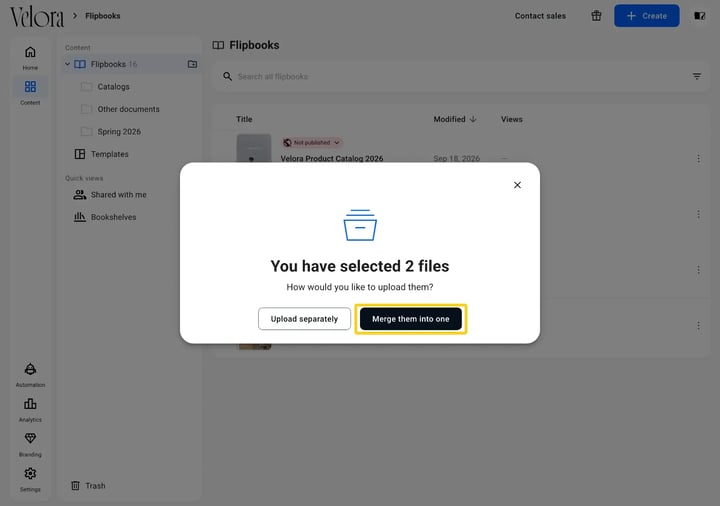
Flipsnack turns a PDF into an interactive flipbook from the dashboard: click Create, choose Upload files, pick the PDF from your device or Google Drive, and the conversion runs on its own. You land on the Customize page, where you set branding, appearance, player controls and add-ons, then publish. Uploading is available on every plan, including Free. Select several PDFs at once and Flipsnack offers to merge them into a single flipbook.
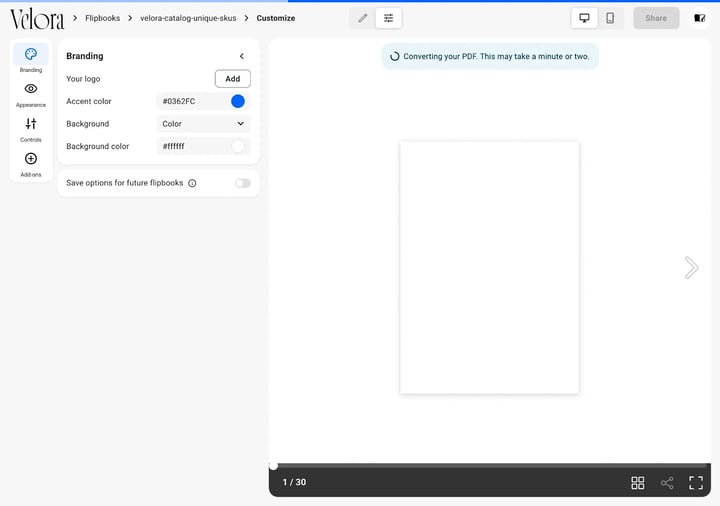
The whole path takes a few minutes for a normal document, and nothing about the original PDF has to change first.
👥 Which upload route fits
- One PDF from your device: the usual case. A catalog, a report, a brochure that is already final.
- From Google Drive: when the approved file lives in a shared Drive and you would rather not download a copy that can go stale.
- Several PDFs merged: a catalog split into sections, or a monthly set you want readers to move through as one publication.
- PDF with full editing support: when you expect to fix typos or swap prices later without re-uploading.
Nothing needs enabling before you start.
Requirements
- A PDF, PPT or JPG file. Page count and file size are capped by plan: see flipbook page count and file-size limits.
- For the Drive route, a Google account you can connect.
How to convert a PDF into a flipbook
Step 1: Click Create, then Upload files
From the dashboard, open Create in the top right and choose Upload files.
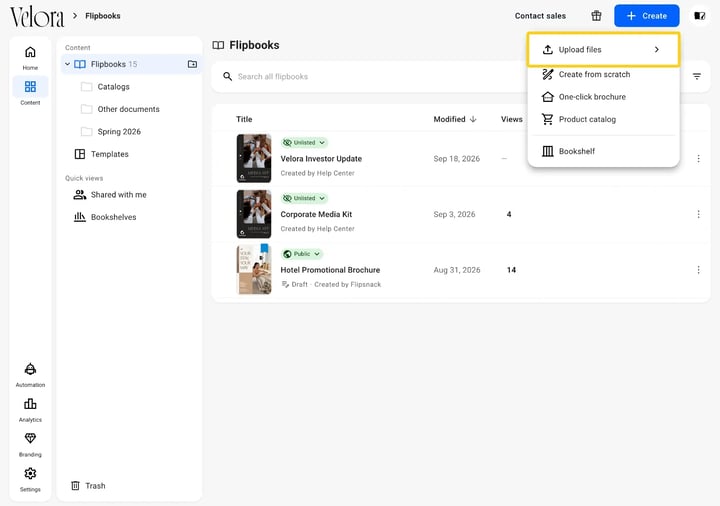
Step 2: Choose where the PDF comes from
The submenu offers From device, Google Drive and PDF with full editing support.
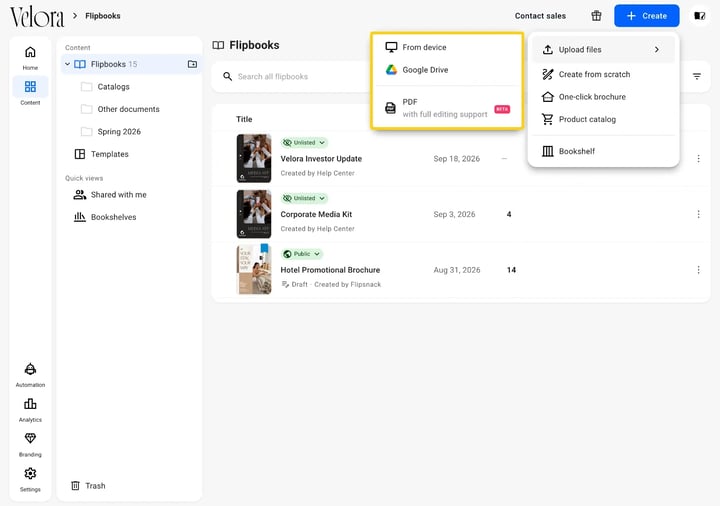
- From device: select a PDF, PPT or JPG file. Name the file before you upload it, because the filename becomes the flipbook's working title.
- Google Drive: connect your Google account the first time, then pick the file. It has to already be in Drive.
- PDF with full editing support (BETA): Flipsnack detects text, images and shapes so you can fix typos, update pricing or swap visuals in the Design Studio later without re-uploading. Conversion takes longer and the result is a design rather than a fixed page image.
Conversion starts as soon as the file is chosen, and a banner tracks it. You do not have to wait on the page.
Step 3: Customize the flipbook
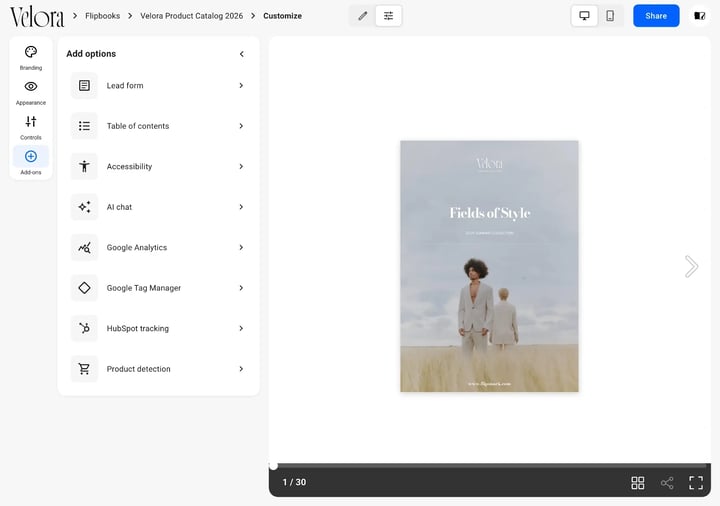
The Customize page has four panels down the left: Branding, Appearance, Controls and Add-ons.
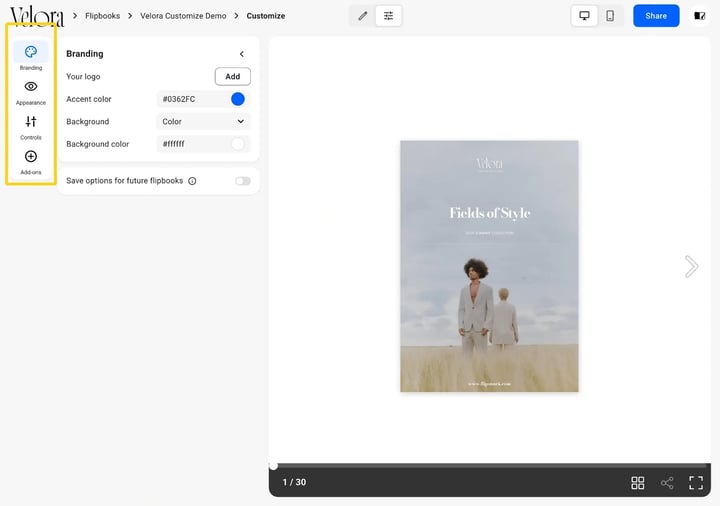
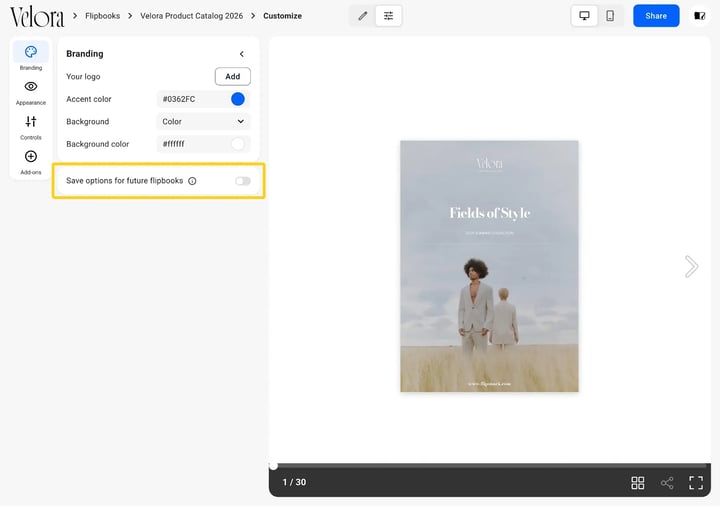
- Branding: your logo, colors and the background behind the pages.
- Appearance: how the flipbook looks and behaves as the reader turns pages.
- Controls: the player's toolbar, navigation arrows, fullscreen, search and the rest of what readers can press. This is where the old Menu controls settings now live.
- Add-ons: the optional extras, including the table of contents, lead form, AI chat, product detection, Google Analytics, Google Tag Manager and HubSpot tracking.
Each panel has a Save options for future flipbooks toggle. Turn it on and the settings in that panel become the default for everything you upload next.
The full reference is in how to customize your flipbook player settings and controls.
Step 4: Add links, videos and other interactive elements
Interactive elements are added in the Design Studio, not on the Customize page. Click the pencil Edit button above the pages to open it.
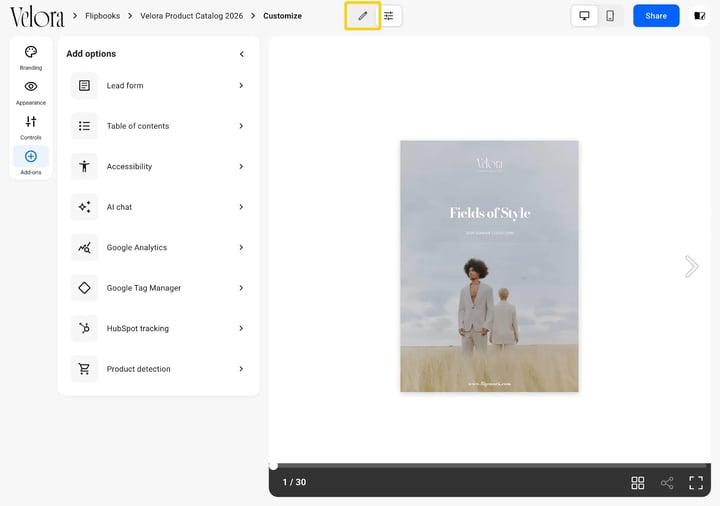
From there you can add links, videos and music, and the other interactions. This step is optional: a flipbook publishes perfectly well without it.
Step 5: Publish
Click Share, give the flipbook a title, and pick who can reach it: Public, Unlisted or Private.
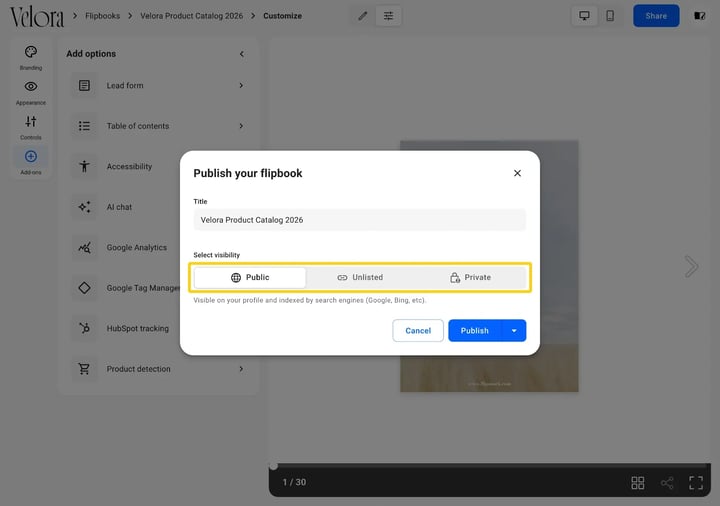
- Public: anyone with the link, and search engines can index it. Choose this if you want the flipbook to rank: optimizing a flipbook for search engines covers the rest.
- Unlisted: anyone with the link, but nothing indexes it and it appears nowhere public.
- Private: only readers you name can open it, after identifying themselves.
The caret beside Publish holds the timing options instead: Save as draft, Publish later and Set inactive date.
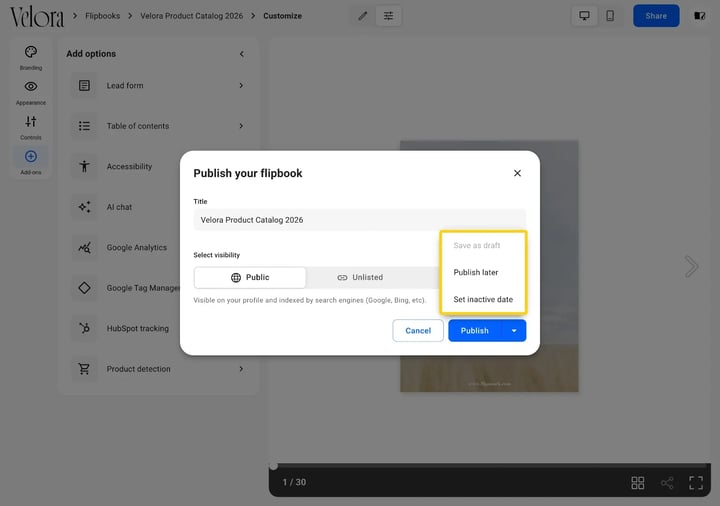
See saving a flipbook as a draft and scheduling a flipbook to publish or deactivate.
Publishing lands you on the flipbook's Overview page, which carries its status, the download options, the sharing options and a preview of how it looks to a reader.
💡 Why a flipbook beats sending the PDF
- Nothing to download and nothing to install: which is what kills a PDF link on a phone.
- Views, time spent, which pages held attention, which links were clicked: none of which a PDF reports.
- Replace the file later and the link is unchanged: so printed and emailed references keep working.
- Links, videos, buttons, a shopping cart and a lead form: all on the page rather than beside it.
How to merge several PDFs into one flipbook
Step 1: Select every file at once
Start the same way, with Create then Upload files, and select all the PDFs in one go. Flipsnack then asks what to do with them: choose Merge them into one rather than creating a flipbook per file.
Step 2: Put them in order
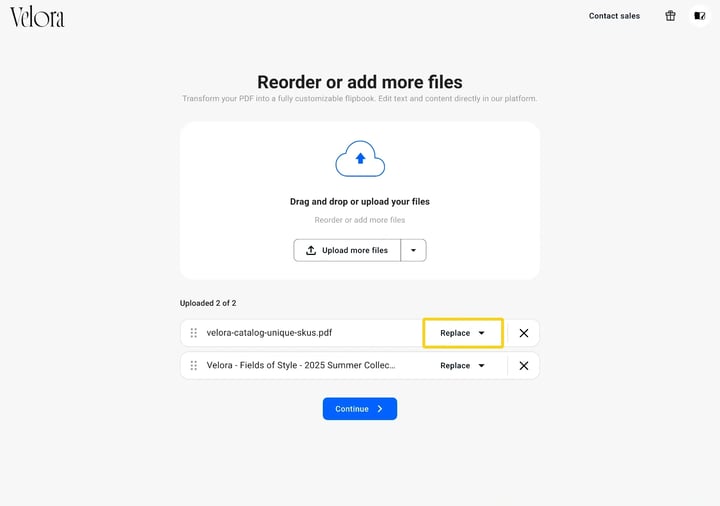
Drag the files into the order you want them read. Upload more files adds another PDF, and Replace swaps one out.
Step 3: Remove a file you did not mean to add
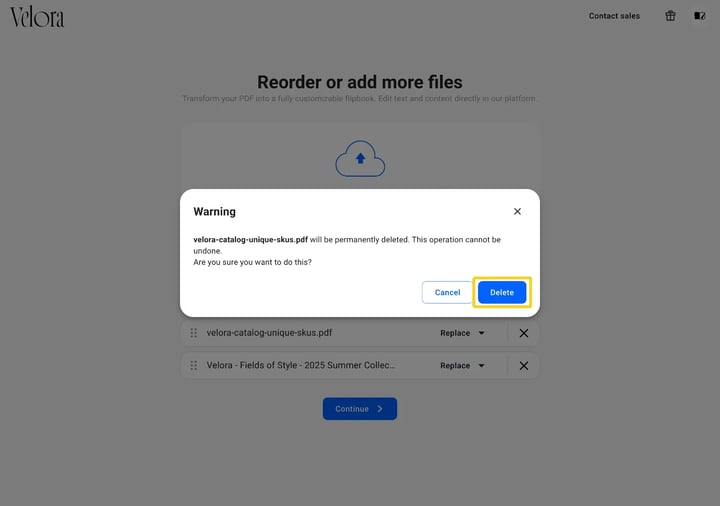
The X at the right end of a file's row removes it.
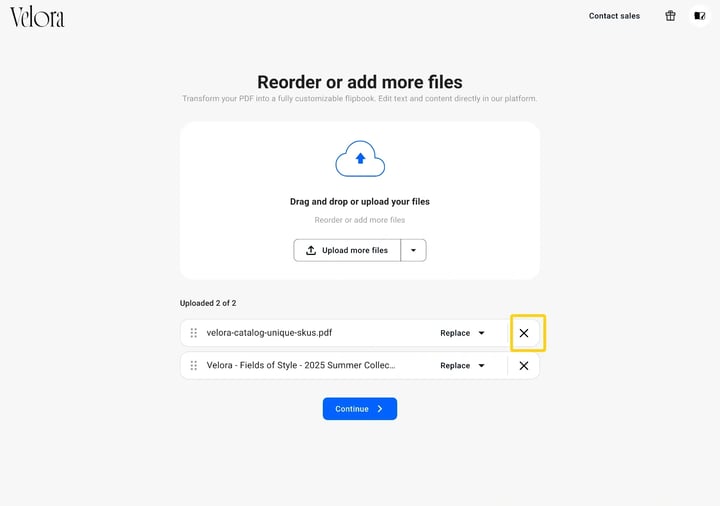
It asks first, and the warning means what it says: the file is permanently deleted, not just dropped from this merge. Click Delete to confirm, or Cancel to keep it.
Step 4: Continue and publish
Click Continue. The merged file converts as a single flipbook, and customizing and publishing work exactly as above.
Tip: The merged page count still has to fit your plan's limit. If you are combining a year of issues, bulk upload is the better route: it creates one flipbook per file instead.
Additional tips / FAQs
- How long does the conversion take? Under a minute for a normal document. Large or image-heavy files take longer, and you can leave the page while it runs.
- Can I upload something other than a PDF? Yes. PPT and JPG files go through the same flow, and converting a PowerPoint presentation covers that route in full.
- My PDF will not upload. Check the size and page limits first, then flatten it: flattening a PDF fixes most failures caused by layers and form fields.
- The pages came out blank or misaligned. That is nearly always the source file. Why a flipbook has blank or misaligned pages walks through it.
- Can I replace the PDF later and keep the same link? Yes. Reorder, delete or replace a PDF and keep the same link explains what survives the swap.
- Do the links inside my PDF still work? Yes, standard PDF hyperlinks carry over. Anything you add in the Design Studio afterwards is also trackable, which PDF links are not.
- Does uploading a PDF cost anything? No. It works on Free, though Free flipbooks carry Flipsnack branding.
Next steps
- Every public way to share and embed your flipbook
- How to customize your flipbook player settings and controls
- Flipsnack publishing options explained: who sees a flipbook
- How to edit a published flipbook and then republish it
- Learn more about Flipsnack statistics
Need expert support?
Our team is here to help. Connect with our team experts or message us via the live chat for personalized assistance.