
Overview
Open the Interactions tab in the Design Studio, pick an element such as a link, product tag, slideshow, video or quiz, and place it on the page. Readers can then click, watch and buy straight from the flipbook. The Elements tab adds graphics, tables and charts around them.
Check your plan before you start.
Requirements
- Plan: Business or above: check your plan or compare plans
- Embeds: the Embed code, pop-up frame and form embed elements need the Enterprise plan: contact sales
How to add interactive elements in Flipsnack
- Open your flipbook in the Design Studio.
- Click Interactions in the left menu.
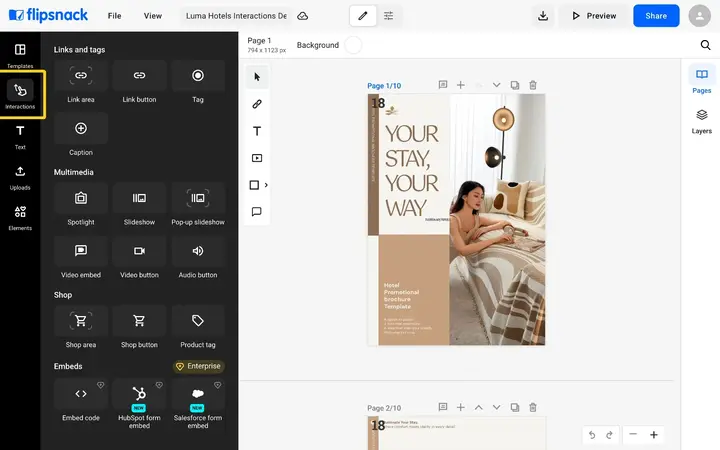
- Select the type of interaction you want to add.
- Configure its properties, such as the link, text, images or button label.
- Place it on the page, then move or resize it.
- Click Preview to test it before you publish.
Tip: To move the page itself, use motion effects on elements, or Living Visuals to turn a static image into subtle auto-playing motion.
Types of interactions in Flipsnack
The Interactions tab groups its elements into sections.
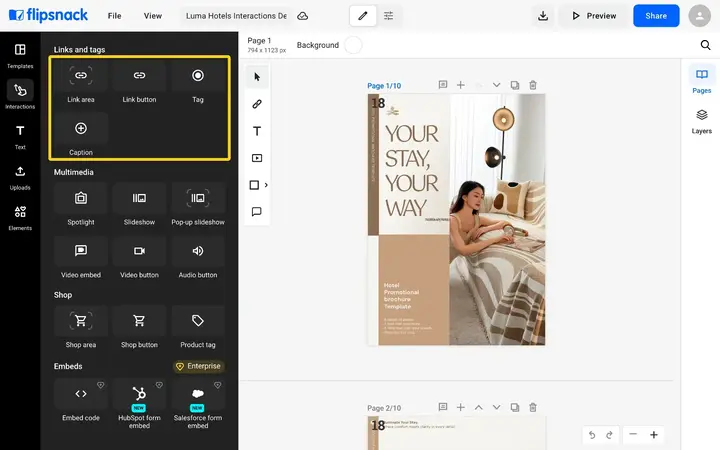
Links and tags
- Link area: a clickable area that opens a page, an email, a phone number or another action.
- Link button: a button with a hyperlink.
- Tag: a pulsing marker with text and a clickable URL.
- Caption: text with an embedded URL for extra information.
Multimedia
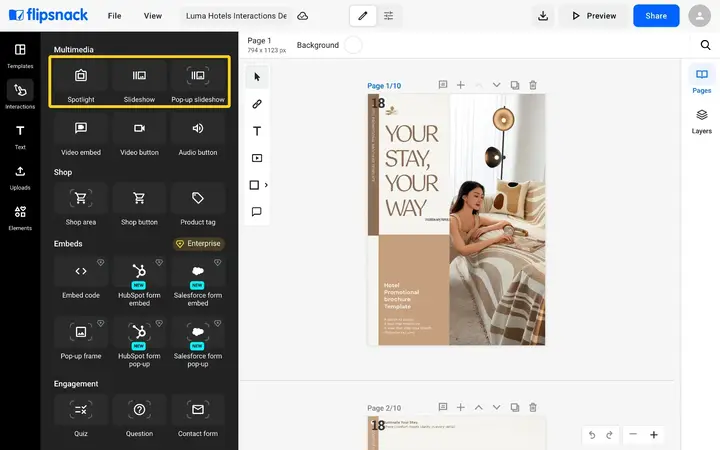
Images
- Spotlight: enlarges an image in a popup when a reader clicks the selected area. Add a link to send readers to your products.
- Slideshow: shows several images in turn. You control the order and the loop duration.
- Pop-up slideshow: works like a slideshow but opens in an overlay window.
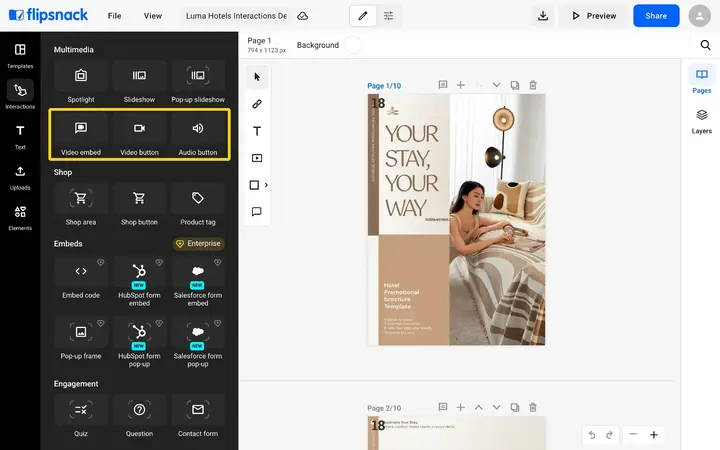
Audio and video
- Video embed: plays an external video from a URL on the page.
- Video button: a button that plays a video when a reader clicks it.
- Audio button: a button that plays an audio file.
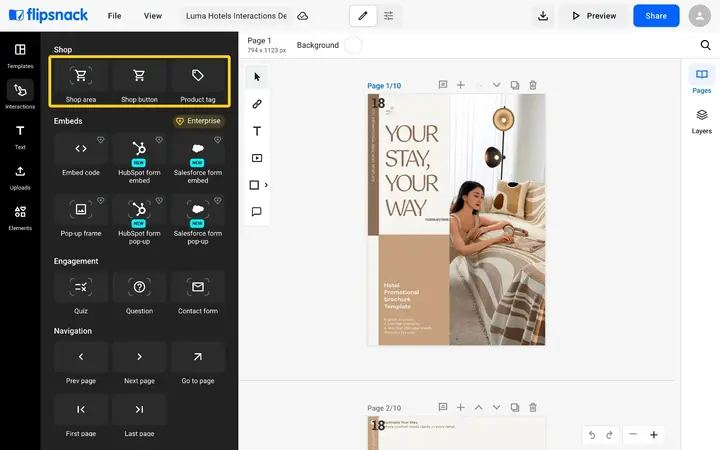
Shop
- Shop area: a clickable area readers use to add an item to a shopping list.
- Shop button: a call-to-action button linked to an online store.
- Product tag: a tag with a title, description, price, URL, button label and up to three product images.
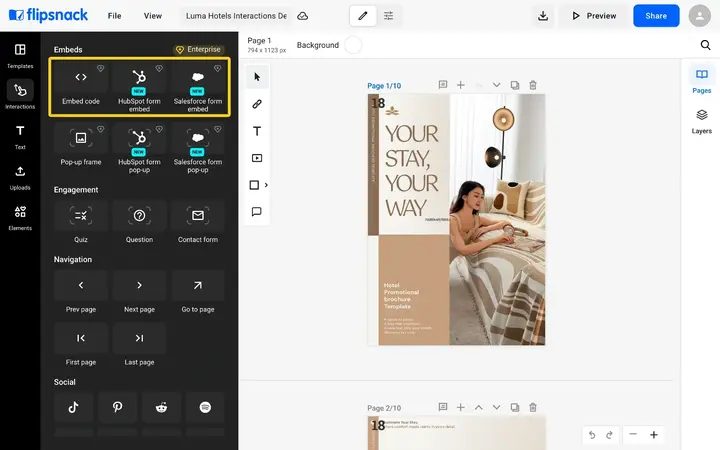
Embeds
The Embeds section is marked Enterprise.
- Embed code: inserts external interactive content through an iframe.
- Pop-up frame: opens the embedded content in a popup.
- HubSpot form embed and Salesforce form embed: place a form on the page. The pop-up versions open the form in a popup.
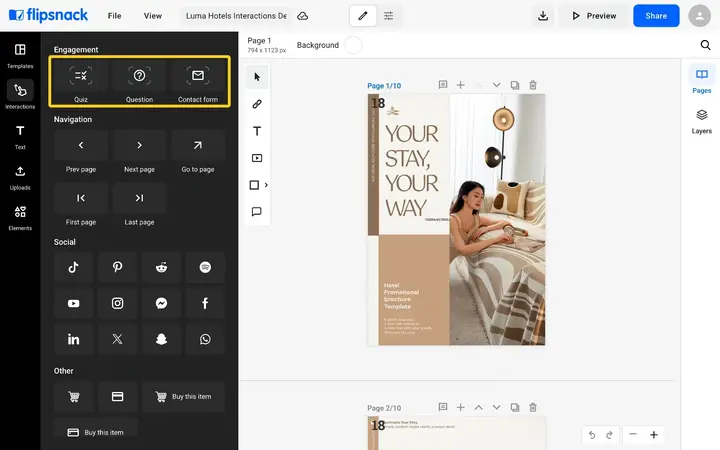
Engagement
- Quiz: an interactive quiz for your readers.
- Question: a question block for surveys or feedback.
- Contact form: a customizable form that collects what readers type.
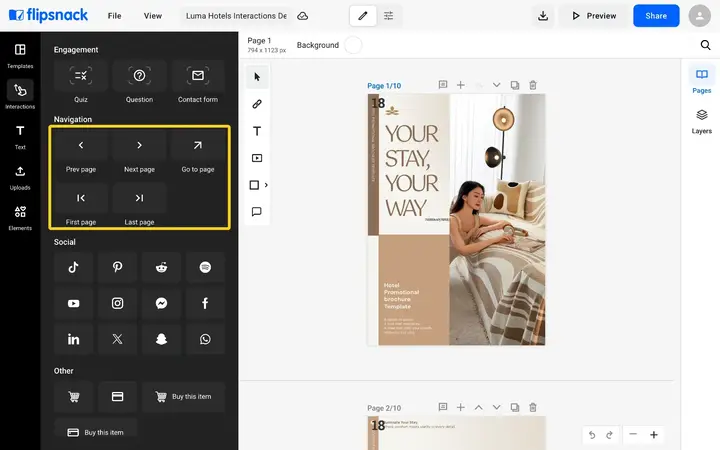
Navigation
- Prev page and Next page: move one page at a time.
- Go to page: a shortcut to a specific page.
- First page and Last page: jump to either end.
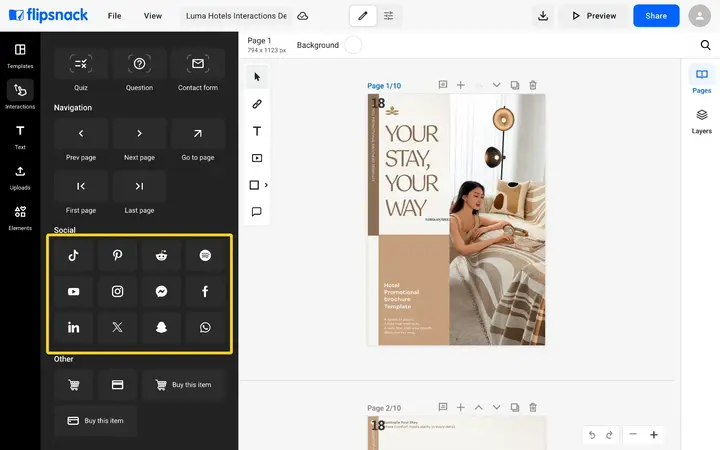
Social
- Social buttons: icons that link to your profiles, including TikTok, Pinterest, Reddit, Spotify, YouTube, Instagram, Messenger, Facebook, LinkedIn, X, Snapchat and WhatsApp.
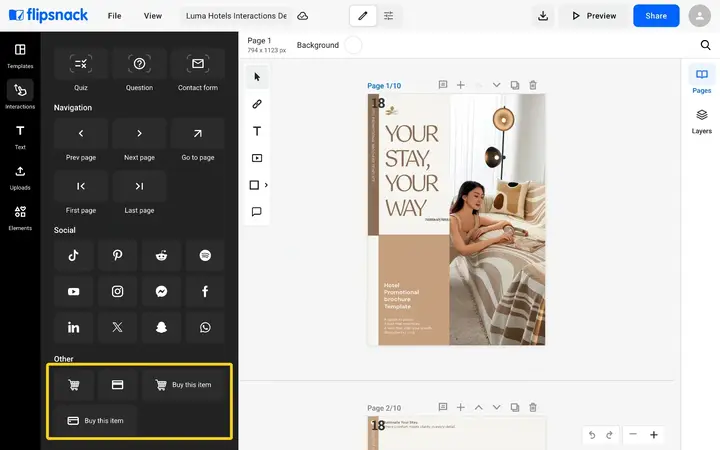
Other
- Buy this item: cart and credit card buttons with a direct purchase link.
💡 Benefits of adding interactions to your flipbook
- Readers engage: a clickable page holds attention longer than a static one.
- Navigation is smoother: buttons, links and page shortcuts take readers where they want to go.
- Conversions rise: shopping buttons and product tags put the purchase next to the product.
- Rich media fits in: embed videos, slideshows and audio without sending readers away.
Types of elements in Flipsnack
The Elements tab adds graphics, tables and charts to the page.
Graphics
- Generate image: create an image from a text prompt.
- Stock photos and Stock videos: libraries of ready-to-use media.
- Shapes: geometric and custom shapes.
- GIFs and Stickers: animated and graphic elements.
- Barcode: a scannable barcode from a product code, typed in or pulled from your product feed.
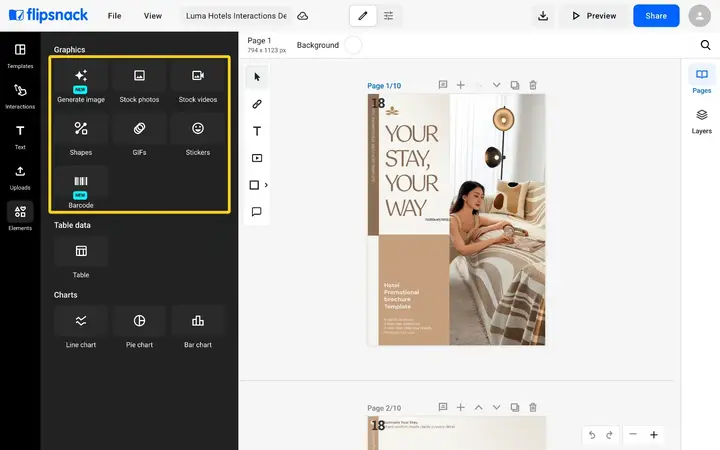
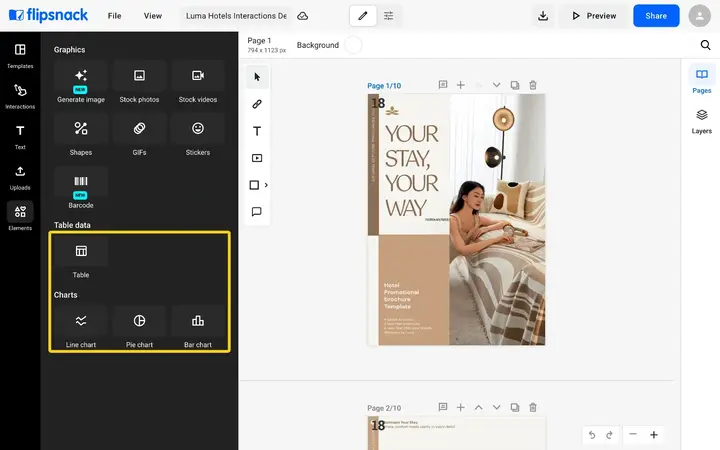
Table data and charts
- Table: organizes data in rows and columns.
- Line chart, Pie chart and Bar chart: data-driven charts.
👥 Where interactive elements are helpful
- Interactive product catalogs: add product tags, shopping buttons and embedded videos.
- Marketing brochures: add videos, pop-up slideshows and quizzes to promotional pieces.
- Digital magazines and newsletters: add social buttons, embedded videos and navigation links.
Manage animated interactions
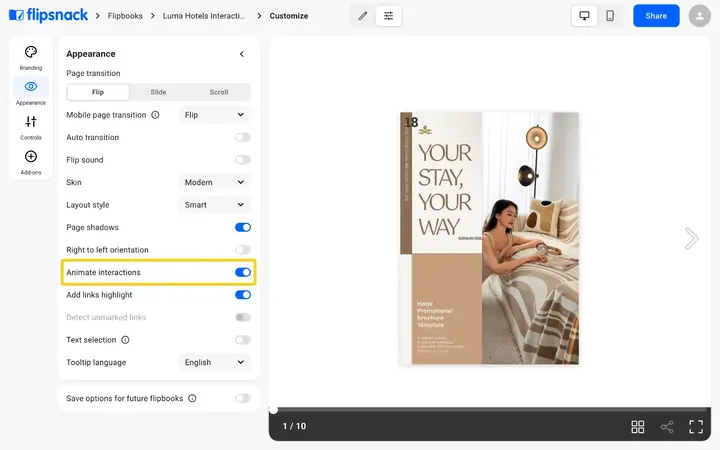
Interactive elements glow softly so readers can spot them. To make them static:
- Click Customize, then Appearance.
- Turn off Animate interactions.
- Click Share to save the change.
Replace a PDF and keep your interactions
You can replace the PDF of a flipbook after you add interactions.
- Go to Content and select the flipbook.
- Click Replace PDF in the settings menu.
- Upload the new version of your PDF.
Your interactions stay in place unless the new layout changes a lot.
Tip: To fix a typo in the text or images of your PDF, use Edit PDF to change them in the Design Studio.
Troubleshooting
- The Embeds elements are locked: Embed code, pop-up frames and form embeds need the Enterprise plan. Contact sales to add them.
- An interaction does not work for readers: publish or update the flipbook, then test it again. Preview shows the page, but readers see the published version.
- Interactions look static in the player: check that Animate interactions is on in Customize > Appearance.
Additional tips / FAQs
- Can I add interactions to hundreds of products at once? Yes. Automate multimedia elements for catalogs.
- How do I make links on a page? See how to add and use interactive links.
Next steps
- How to add and use interactive links in your flipbooks
- How to turn a static image into Living Visuals
- How to add music and videos to flipbooks
- How to animate elements in Design Studio
- How to create shoppable catalogs
- Adding photo slideshows in your publications
- How to automate multimedia elements in your digital flipbooks
- How to publish your flipbook
Need expert support?
Our team is here to help. Connect with our team experts or message us via the live chat for personalized assistance.