
Overview
Understanding how content updates impact analytics is crucial for maintaining reliable performance metrics and making data-driven decisions. Learn how different types of content modifications affect your tracking capabilities and how to preserve critical performance data.
Adding pages
When you add a new page, it appears in your analytics report with zero views. If it’s inserted at the start or middle, all following pages shift positions, and the report updates to match the new layout. Even if a new page didn’t exist in previous months, it will show up in those reports with zero views.
Note: Pages are listed in the statistics report in the same order as they appear now in your flipbook, in the published version.
So what if I add a new page and then check the report to see how the flipbook has performed in the last month?
The page will still show up in your report but with 0 views. If you inserted a new page in your flipbook and it is page 25 now, the report will list it as page 25, even if you check the stats for last year, when page 25 was not yet part of the flipbook.
.png?width=720&height=361&name=Screenshot%202026-01-15%20at%2015.47.47-mh%20(1).png)
Deleting pages
Deleted pages disappear from your report once the flipbook is republished. You’ll lose all data for them unless you download the analytics first. For full data, select the "all time" range when exporting.
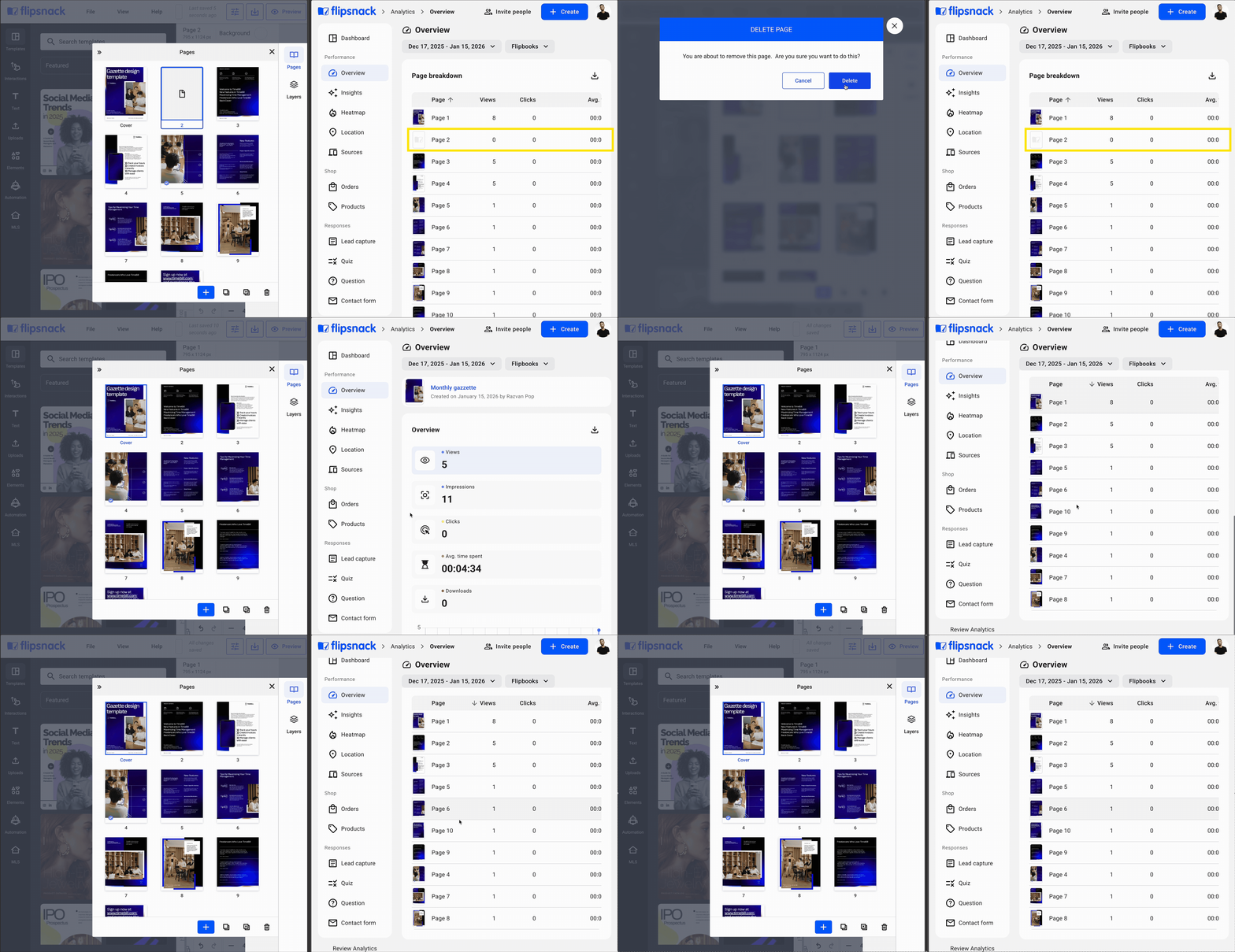
Switching the order of pages
Changing page order won’t erase any views or clicks. The analytics stay tied to the content, even if a page moves. For example, if page 5 (with 200 views) becomes page 20, it keeps those views and continues counting from there. If you had 200 views on page 5, and you moved it to the back of the flipbook, and it has now become page 20, the counter will not be reset, it will continue to count views starting with 200.
.gif?width=720&height=371&name=Proiectul%20%C3%8Embinare%20videoclipuri%20(1).gif)
Replacing pages
If you need to update a page from an uploaded PDF file, you can do so in the Design Studio. However, replacing a page this way resets its analytics to zero because you're actually deleting the old page and adding a new one in its place. Flipsnack treats it as new content, so all previous interactions are cleared.
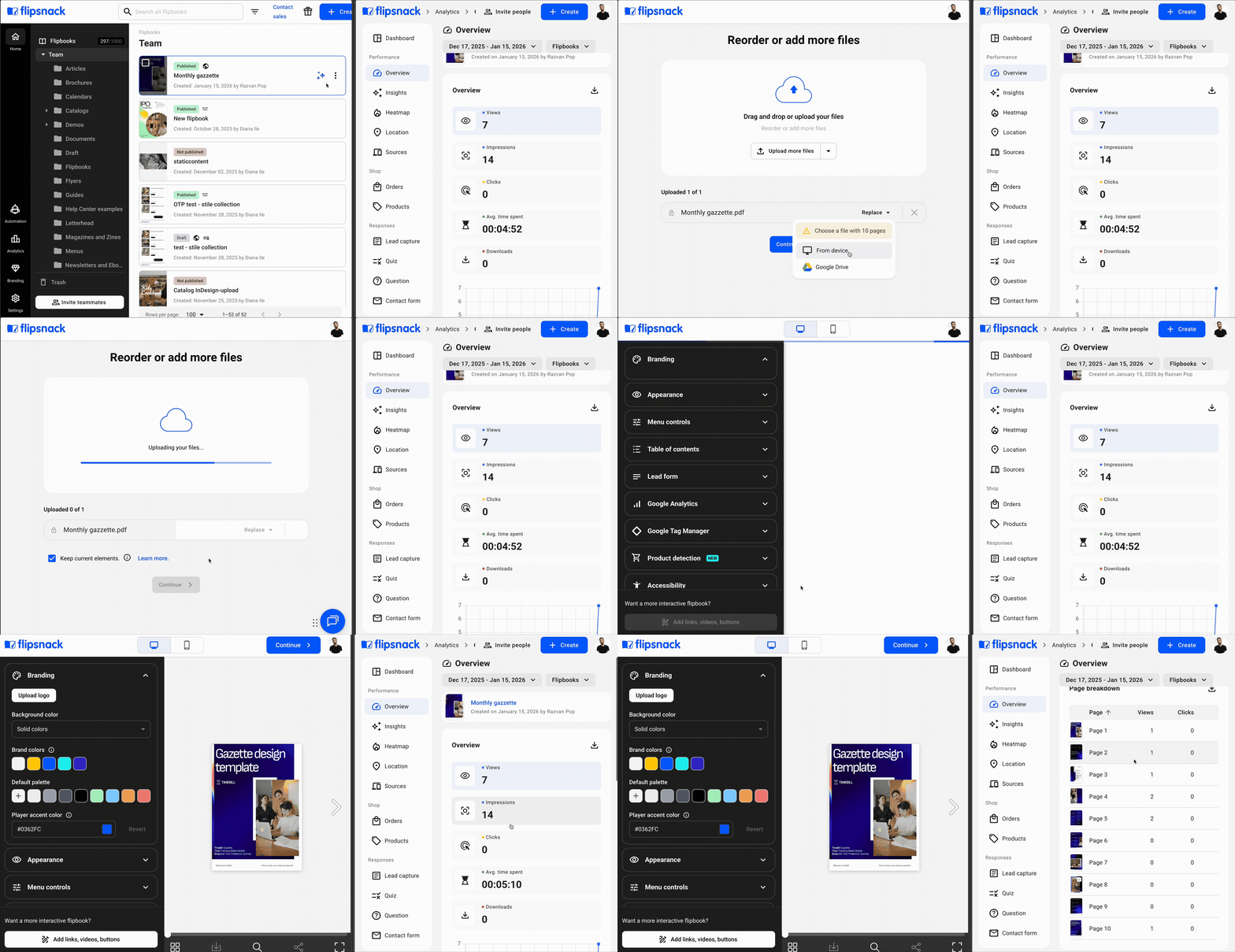
Tip: Instead of using the Design Studio to delete and insert pages manually, you can make changes directly in your preferred editing tool (such as Adobe InDesign or Illustrator), then export and replace the entire PDF as showed below. This method keeps all your analytics and interactions intact and avoids data loss.
.gif?width=720&height=371&name=F%C4%83r%C4%83%20titlu%20(1).gif)
Replace a PDF
If you need to update the entire document while keeping all interactions and analytics, use the Replace PDF option instead of uploading a new file. This preserves all existing analytics and keeps your tracking consistent.
Learn more in this guide: Replace PDF and keep interactions.
Next steps
Useful resources:
Need expert support?
Our team is here to help. Connect with our team experts or message us via the live chat for personalized assistance.