
Blank pages after a PDF upload in Flipsnack are usually caused by export settings in the design app it came from, most often Corel Draw or Adobe products. Setting the right compression, font embedding and text-as-curves options on export, or optimizing the file with Adobe's Preflight tool, resolves the conversion. This fixes uploads that produce blank or broken pages once re-exported.
Exporting PDFs from Corel Draw
If you're experiencing blank pages in Flipsnack's Design Studio after uploading a PDF created in Corel Draw, follow these steps to ensure proper export settings:
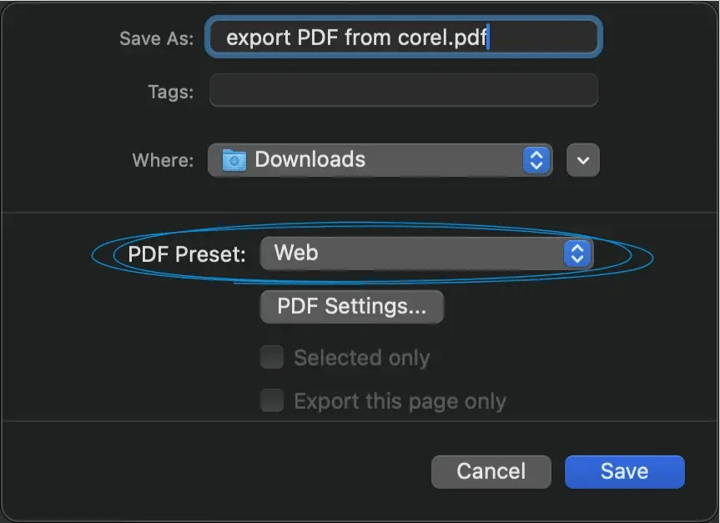
- In Corel Draw, go to File > Export To > PDF to open the export window.
- Under PDF Preset, select the "Web" option.
-
Configure the export settings as follows:
-
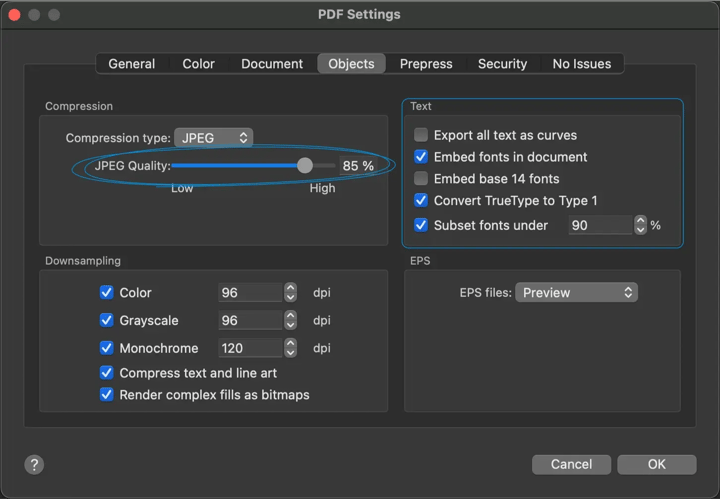
Compression:
-
Set compression type to JPEG with quality set to high (85%).
-
-
Objects:
-
Enable the following options:
-
Export all text as curves
- Embed fonts in document
- Convert font type to Type 1
- Subset fonts under 90%
-
-
- Click Save to finalize the export.
Note: If you want your to be exported as non-editable, check the "export all text as curves" option!
By following these steps, you can ensure that the PDF conversion process in Flipsnack works correctly without displaying blank pages.
Optimizing PDFs using Adobe PDF and Preflight
If your PDF contains high-resolution images or numerous pages, it may not upload correctly in Flipsnack. To optimize the file size, follow these steps using Adobe PDF:
- Open your PDF in Adobe Acrobat.
- On the left sidebar, click on "All Tools".
- Search for "Use Print Production" (you may need to click "View More" to find it).
- Once inside Print Production, select the Preflight option.
-
In the new Preflight window, go to the Profiles tab, navigate to the PDF Fixups section, and choose:
Downsample image resolution to 150 ppi (bitmaps to 300ppi).
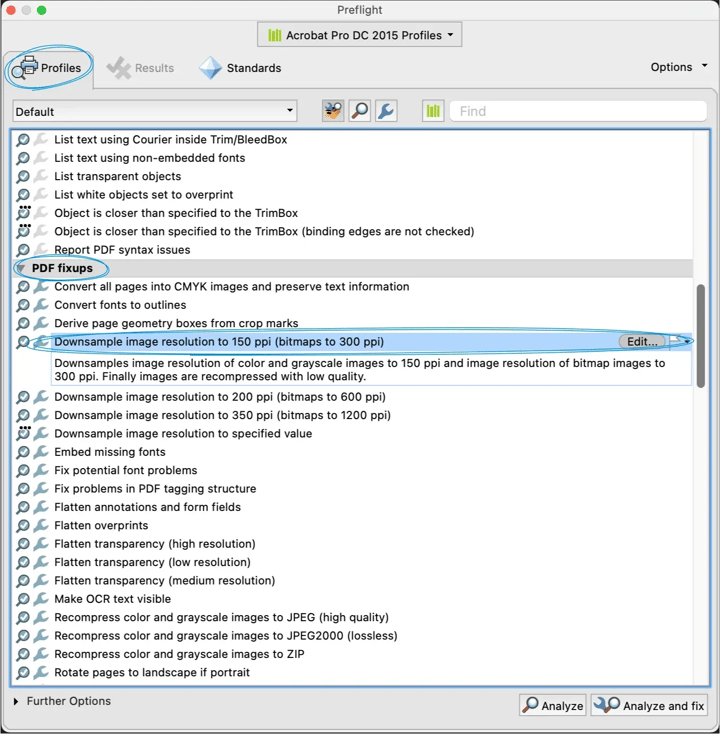
- Click Analyze and Fix to start the process.
- Save the optimized PDF with a new name.
- Click Save, and the optimization process will begin.
- Once completed, upload the optimized file to Flipsnack.
Example: A 450 MB file optimized through this process resulted in a file size of approximately 65 MB.
Troubleshooting issues after replacing a PDF
In some cases, replacing a flipbook's PDF can result in duplicate flipbooks with the same name (created on different dates), or in an error when opening the publication afterwards, such as a black screen with the message "Publication not available". If this happens, here is how to isolate the cause:
- Test on a copy: Create a test copy of your flipbook and perform the Replace PDF action on the copy, so you can observe the behavior without affecting the original.
- Published link changed: Verify whether the published link remains the same after the replacement, or if a new flipbook entry appears in your account.
- Record the error message: Note the exact error message or appearance when opening the publication after the replacement. This information will help our team pinpoint the cause faster if you reach out via live chat.
For an overview of how replacing a PDF and other flipbook updates can affect your analytics, see Flipbook updates that can affect statistics.
Troubleshooting upload issues with page editing (beta)
A flipbook edited with the page editing (beta) feature may occasionally not upload or display properly. To diagnose the issue:
- Editor vs published link: Determine whether the issue occurs during the Replace File action in the editor, or only when the flipbook is published and opened via its public link.
- Isolate upload vs publish: Test replacing the file directly to see if the problem is related to the upload itself or to the publish and display step.
Optimizing videos and GIFs
Upload issues are not limited to PDFs, media files added to your publications can also cause problems:
- Videos: optimize your video files before uploading them to your flipbook to improve upload performance and reduce related problems. For more details, see How to upload videos in your flipbooks.
- GIFs: a GIF must be uploaded as a .gif file in order to function as an animated GIF in your flipbook. If it was uploaded in another format, it may appear as a static image. Confirm the original asset is a .gif file and re-upload it if necessary. For more details, see How to add GIFs in your digital publications.
If you still encounter any challenges, feel free to reach out to our support team for further assistance.
Next steps
- PDF format and size guidelines before you upload a file
- Common PDF conversion issues in Flipsnack and their fixes
- Fix blank pages or missing content after a PDF upload
Need expert support?
Our team is here to help. Connect with our team experts or message us via the live chat for personalized assistance.