
Overview
Flipsnack’s built-in HubSpot integration covers flipbooks. It does not cover your Flipsnack profile page or custom domain. To track those, you deploy HubSpot’s tracking code yourself through Google Tag Manager (GTM).
👥 Where HubSpot tracking is helpful
- Marketing — attribute profile page visits and flipbook opens to the campaign that drove them.
- Product catalogs — measure how readers move from your public catalog profile into individual catalogs.
- Sales materials — capture profile-level visitor activity in HubSpot alongside per-flipbook engagement.
This gives marketing teams full-funnel visibility: the profile page where readers land, and the flipbooks they open from it, both reporting into HubSpot analytics. From there, profile traffic can feed the same lead capture, workflows, and attribution reporting as the rest of your site.
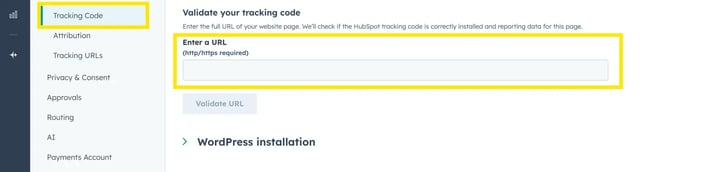
Warning: After installing the HubSpot tracking code, there may be a short delay before it becomes visible and active on your profile and flipbooks. To verify the installation, enter the flipbook URL under the Validate your tracking code section.
Key HubSpot Analytics metrics
Once integrated, HubSpot Analytics lets you track and analyze various metrics to understand user behavior and improve engagement. Some key metrics include:
- Sessions — the number of visits to your Flipsnack catalogs.
- Page views — how many times a catalog page has been viewed.
- New vs. returning visitors — how many users are first-time viewers vs. repeat visitors.
- Bounce rate — the percentage of visitors who leave without interacting further.
- Traffic sources — where your visitors come from (organic search, social media, direct, etc.).
- Time on page — how long users spend on each catalog.
- Engagement rate — how users interact with different elements of your flipbooks.
- Conversion tracking — form submissions and lead captures linked to your catalogs.
Requirements
- Flipsnack plan: Enterprise
- HubSpot: Marketing Hub (Starter, Pro or Enterprise)
- Access to Google Tag Manager, with a container installed on your Flipsnack profile or custom domain
- To confirm availability on your plan, contact the Flipsnack team.
Note: This method applies to the Flipsnack profile (flipsnack.com or your custom domain), not inside the flipbook player. To track individual flipbooks, use the built-in HubSpot integration linked under Next steps.
Get your HubSpot tracking code
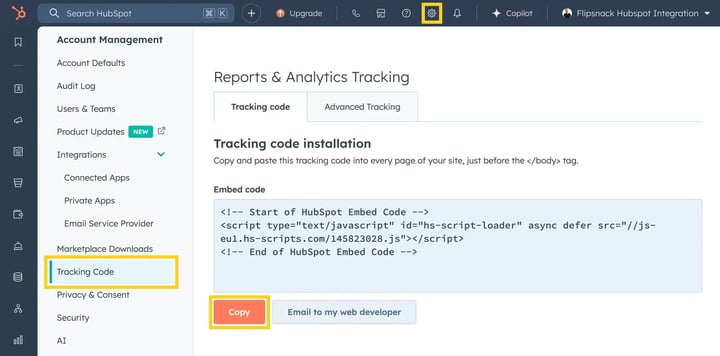
- Log in to HubSpot and click the settings icon in the main navigation bar.
- Go to your tracking settings:
- On Marketing Starter or HubSpot’s free tools, open Tracking Code in the left sidebar.
- On all other subscriptions, open Tracking & Analytics > Tracking code.
- In the Embed code section, click Copy.
Now that you have the tracking code, you can add it to Google Tag Manager as a Custom HTML tag.
Add the tracking code in Google Tag Manager
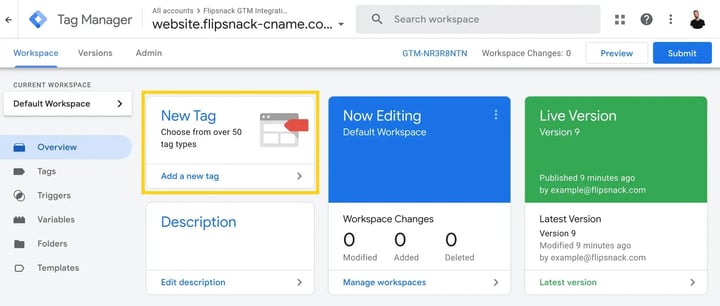
- Log in to Google Tag Manager and select the container associated with your Flipsnack account.
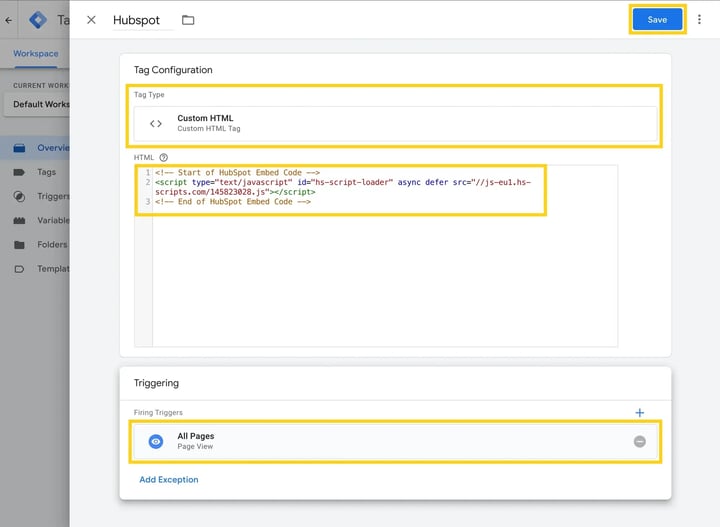
- In the left sidebar, go to Overview, then click New Tag.
- Click Tag Configuration.
- Select Custom HTML Tag and give the tag a descriptive name.
- Paste the tracking code into the HTML field.
- Click Triggering and set the rule to All Pages, so the tag fires on every page where the Google Tag Manager code is present.
- Click Save, then click Publish in the upper-right corner.
Final configuration in HubSpot
-jpg.jpeg?width=720&height=444&name=Screenshot%202025-02-18%20at%2014-48-10-mh%20(1)-jpg.jpeg)
- Return to HubSpot and open Tracking & Analytics settings.
- Click Advanced Tracking.
- Under Additional site domains, click + Add domain and enter your Flipsnack custom domain. If you don’t use a custom domain, add flipsnack.com and player.flipsnack.com.
- Adjust the settings for your setup:
- Enable Limit cookies to subdomains if your account uses a subdomain. The subdomain then appears as a source in HubSpot’s analytics tools.
- Enable Automatic cross-domain linking if you use multiple domains or don’t have a custom domain set up.
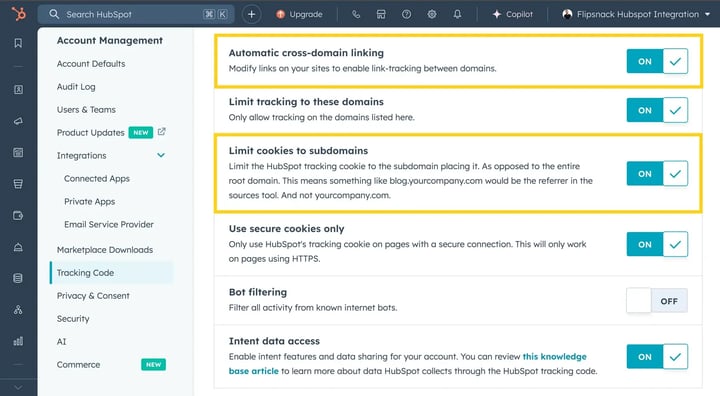
Once configured, HubSpot begins collecting visitor data from your Flipsnack profile. That data can be used for lead generation, automation workflows, and analytics.
Additional tips / FAQs
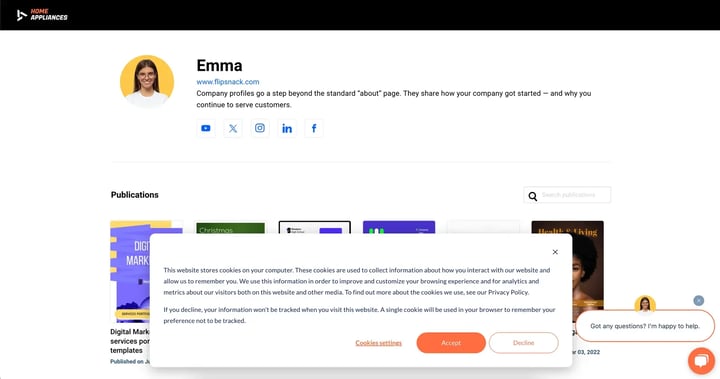
- Chat widgets and cookie banners: Deploying HubSpot through GTM also unlocks HubSpot-powered chat widgets and cookie banners on your Flipsnack profile.
- Keep the container published: Keep the GTM container published. An unpublished workspace change means the tag never fires in production.
Troubleshooting
What to do if tracking doesn’t appear right away: after installing the tracking code there may be a short delay before it becomes active on your profile and flipbooks. To verify, enter the URL under HubSpot’s Validate your tracking code section.
What to do if data never arrives: confirm the GTM container is installed on the domain you’re testing, that the tag’s trigger is set to All Pages, and that the workspace was published, not just saved.
What to do if traffic shows under the wrong domain: revisit Advanced Tracking in HubSpot and check the Additional site domains entries and the cross-domain linking settings.
- Do I still need this if I’ve connected HubSpot in Flipsnack settings? Yes, if you want profile page tracking. The built-in integration tracks flipbooks only.
- Which domains should I add in HubSpot? Your Flipsnack custom domain. Without a custom domain, add flipsnack.com and player.flipsnack.com.
- Does this replace per-flipbook HubSpot tracking? No. The two work together — GTM covers the profile, the built-in integration covers each flipbook.
Next steps
- Integrate HubSpot with your Flipsnack account
- How to integrate Google Tag Manager (GTM) with Flipsnack
- How to integrate Google Tag Manager (GTM) in your flipbook player
- Learn how to create a custom cookie banner using HubSpot
- Add a HubSpot chat widget to your flipbook
Need expert support?
Our team is here to help. Connect with our team experts or message us via the live chat for personalized assistance.